

What Kyle Clark knows now...
41-year-old Kyle Clark started out calling sports for his high school in rural New York at age 15. Now, 26 years later, Clark has won awards and is a trusted name in Denver journalism.

In 1999, sitting at a media table at Lyons High School in the agricultural western part of New York state, 15-year-old Kyle Clark was calling his high school’s basketball game on local radio station WACK-AM; the first of many opportunities in the field of broadcast journalism, including working at WACK-AM during his summer breaks.
Clark didn’t realize then what he knows now: it was the beginning of a lifelong career, but not in sports.
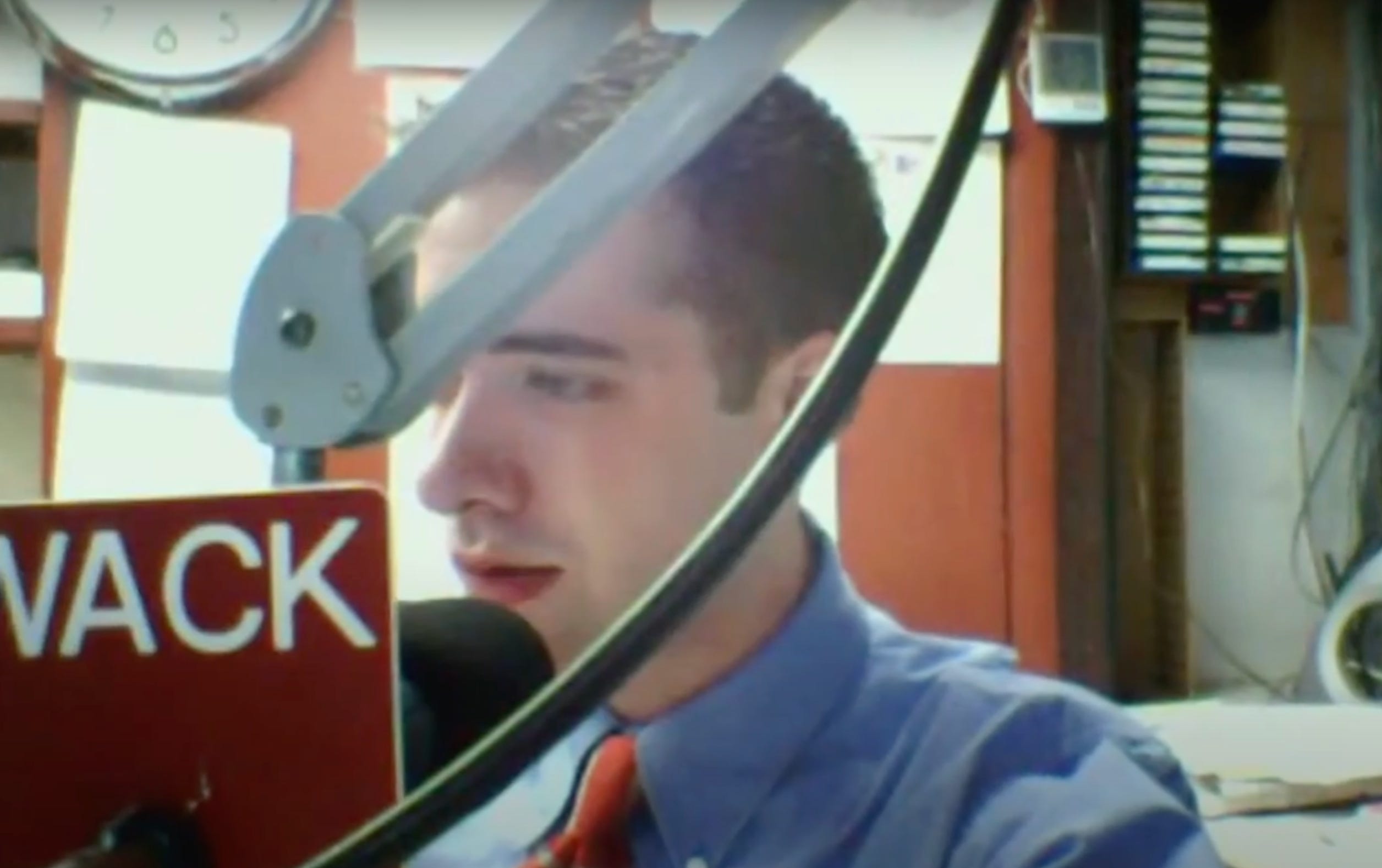
Clark was interested in sports and thought that sports media was the direction his life was going to take him. In college, an encounter with a professor changed that trajectory.
My freshman year at college, I had a very good professor who […] me down and said, ‘You are really passionate about the news and current events. You’re equally passionate about that as you are sports, and you’re gonna have a lot more opportunities in news.’”
Though sports-media wasn’t the path, Clark’s passion for truth led him to where he belonged. In 2007, after having reported professionally for two years, this Ithaca College graduate moved from western New York to the Front Range of Colorado—Denver to be exact, and found a home at KUSA.
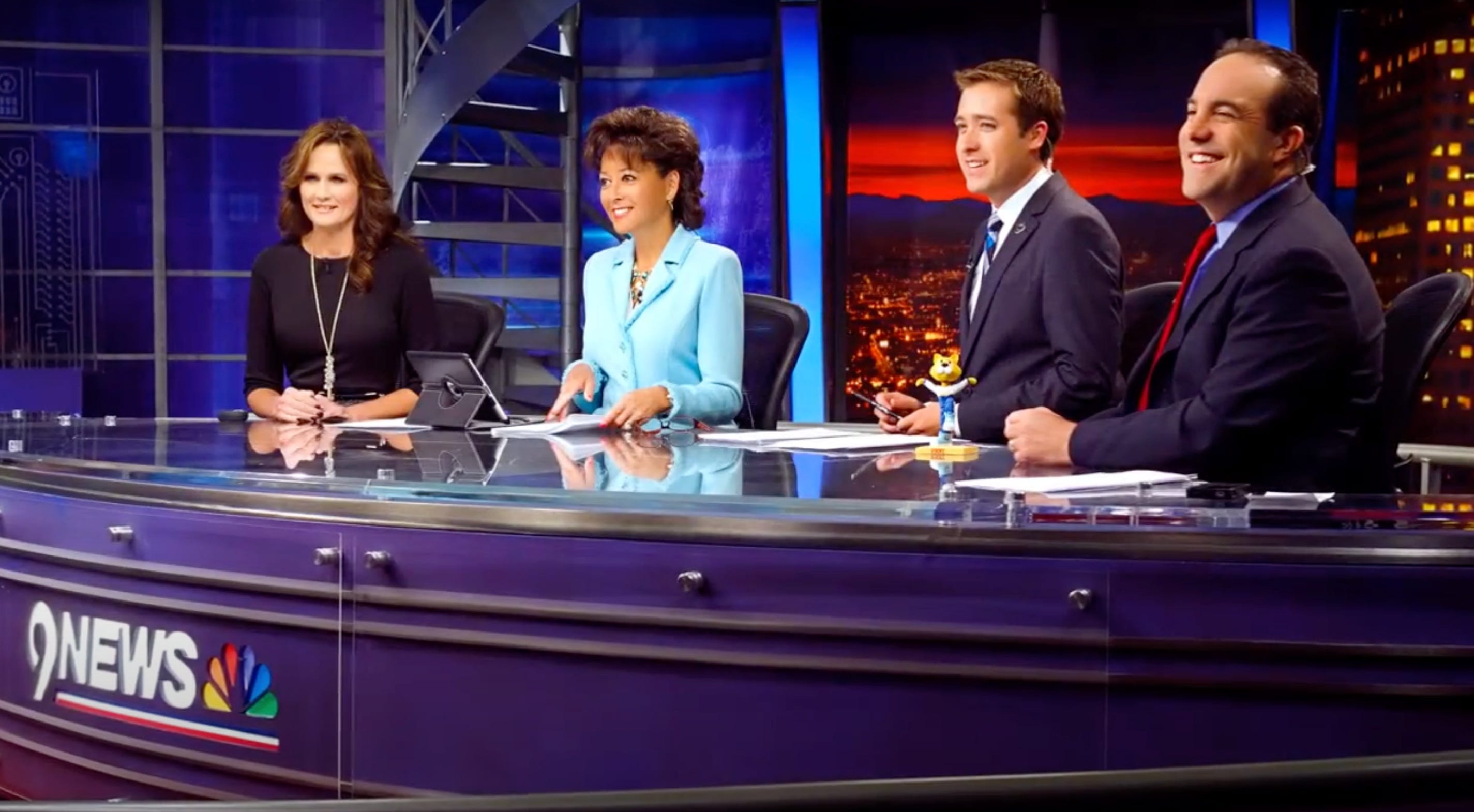
Clark quickly became a household name and grew to be a trustworthy face on 9News and in local broadcast journalism in general, who stood strong and accepted nothing less than the truth. Clark’s stories impacted his community.
“That’s the reason why I’ve chosen to remain a local journalist—because I think that’s where you can make an impact. And it’s also where you’re the most responsible to the community, which to me is important too. If we’re gonna hold other people to account, people should be able to hold us to account.”
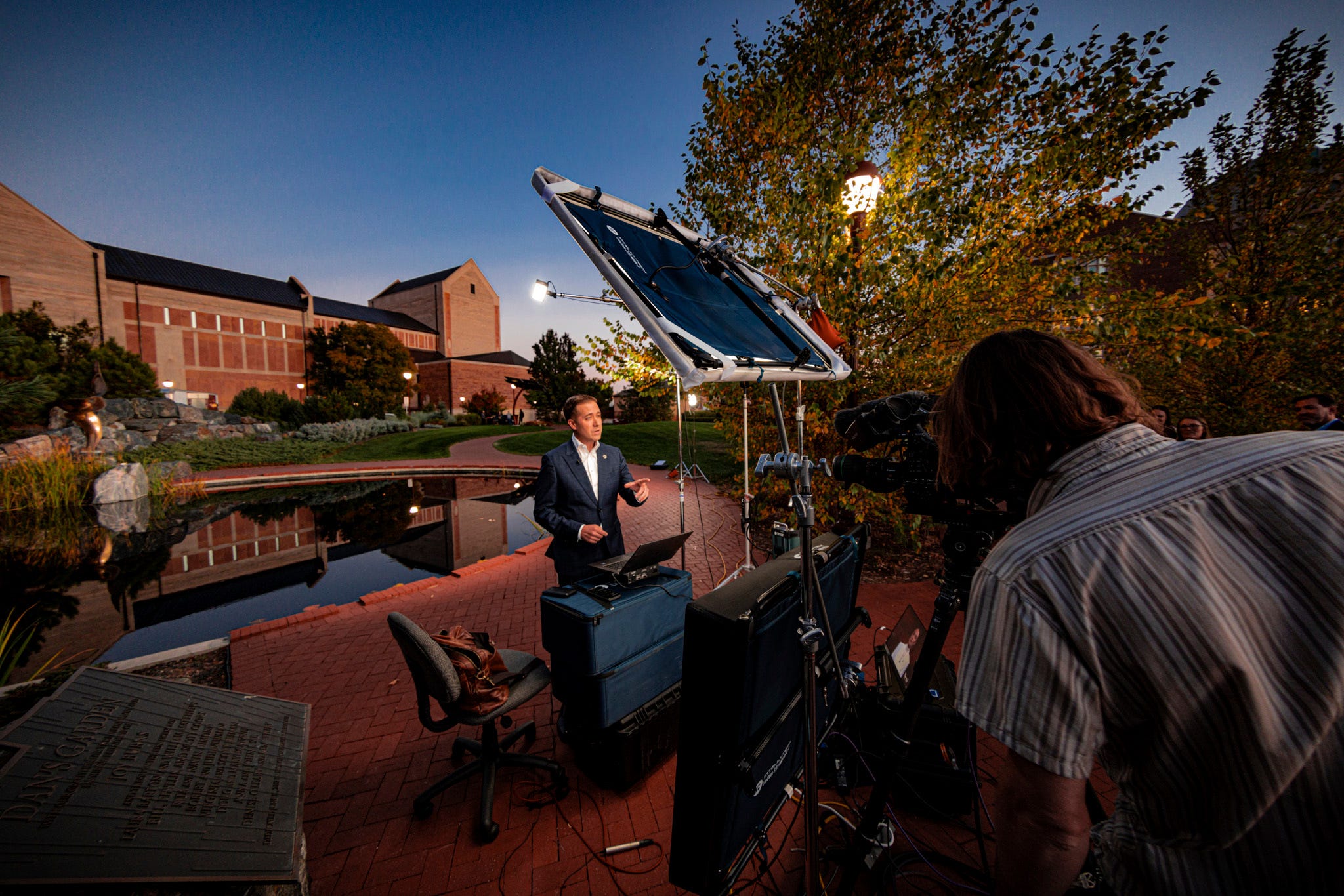
Mallory Harris, who has been the producer for Next with Kyle Clark for nearly three years, describes Clark as someone who is driven, who doesn’t let people get by without answering the question and who will stop the interview if the interviewee isn’t answering. In short, for Clark, truth, justice, responsibility and journalism go hand-in-hand.
"I think a way that I see Kyle and the rest of the Next team try to incorporate the ideas of truth and responsibility is, one, not discarding out of hand a story that comes to us because it criticizes a Democratic lawmaker or a Republican lawmaker—and giving equal weight to concerns from people across the spectrum. Making sure that we are not letting, you know, internal biases drive reporting and drive what we're putting effort into."
Clark’s preferred method of sharing that truth in journalism is to create stories that impact the community and the policy makers. Harris explained that at KUSA, Clark and other reporters were more concerned with the truth than keeping relationships that were easy to maintain.
“And it's been really refreshing—not challenging, I think—to work on a team that decides that, you know, truth and accountability reporting is more important to us than cultivating beneficial relationships.” Harris went on to say that “it’s rare to have somebody reach the level that he's at and still be so invested day in and day out... he's just somebody that is really invested in doing the hard work and really enjoys it.”
In 2014, Clark did a feature story on a Army Cpl. Joe Baldonado, who was killed in action, heroically, during the Korean War. Because this soldier’s family was migrant, he had no “home” state. When it came time to recognize him, after being awarded posthumously the Medal of Honor, Clark used his know-how and resources to track down Cpl. Baldonado’s brother. Clark went on to find data to show that he was actually born in Colorado. Baldonado’s name is now on the Colorado Freedom Memorial, and that would never have happened had Clark not spent his time and energy to tell Baldonado’s story, connect with his family and inform the community of the important things happening right under their noses.
Clark knows that his role as a local journalist was crucial to being able to affect the change that he has. As a local journalist, he is able to interact with people in his community; the people whose stories he is telling are his neighbors.
“My friends who work in national journalism, for better or worse, don't really have that [opportunity to interact with viewers]. It's nice because at the end of the day they're able to […] go home and uncheck from it, you know, but that's the blessing and the curse of local media, which is that you're a part of the community. I think that's the power of it.”
Those impactful stories often involve handling controversial interviews and require a certain level of objectivity and, if not neutrality, willingness to be unbiased.
Immediately after the December 2019 announcement that she would be running for U.S. House of Representatives in Colorado, Clark interviewed Republican candidate Lauren Boebert on his show NEXT with Kyle Clark, about her desire to go to Washington, D.C.

“It was a flaming train wreck,” Clark said. “It was clear she had no idea how Congress worked. She didn't know how any of it worked.” Clark continued, “She just wanted to go to D.C. and fight with people. Uh, and to her credit, she's made good on that promise; she's gone to D.C. to fight with people. She's become quite famous for it.”
What Kyle Clark knows now is that many skills are required to make an effective journalist, including a love for tearing apart ideas to see how they work. Something he did on multiple occasions during that interview. But one of the most important aspects of journalism is simply listening.
“You need curiosity and the ability to listen and to highlight and pull out of somebody else's remarks what might be unremarkable to them but would be remarkable to other people.”
In 2015, KUSA received the Walter Cronkite Award and Clark and Brandon Rittiman, who co-hosted the senatorial debate which was recognized with the award, accepted the award at the National Press Club in Washington, D.C.

That same year, Ithaca College recognized Clark, a 2005 Ithaca College graduate, with their Outstanding Young Alumni Award.
Kyle Clark is now the host of NEXT with Kyle Clark, which Clark’s LinkedIn account boasts as being “is Colorado's most-watched local newscast.” In addition to being the most-watched newscast, KUSA says that his viewers have raised more than $14 million for Colorado's non-profits since 2020 in a program called Word of Thanks.
updated 04/19/2025 at 05:17